
The short answer
Minds by Animoca Brands is a platform for personal AI agents. Its current examples show Minds helping coordinate work between teams, organise a family-care workflow, surface wellbeing patterns, develop an online-shop plan, research an event and build playable game prototypes. Across the six stories, the useful pattern is clear: give the Mind a goal, relevant context and a concrete result to produce.
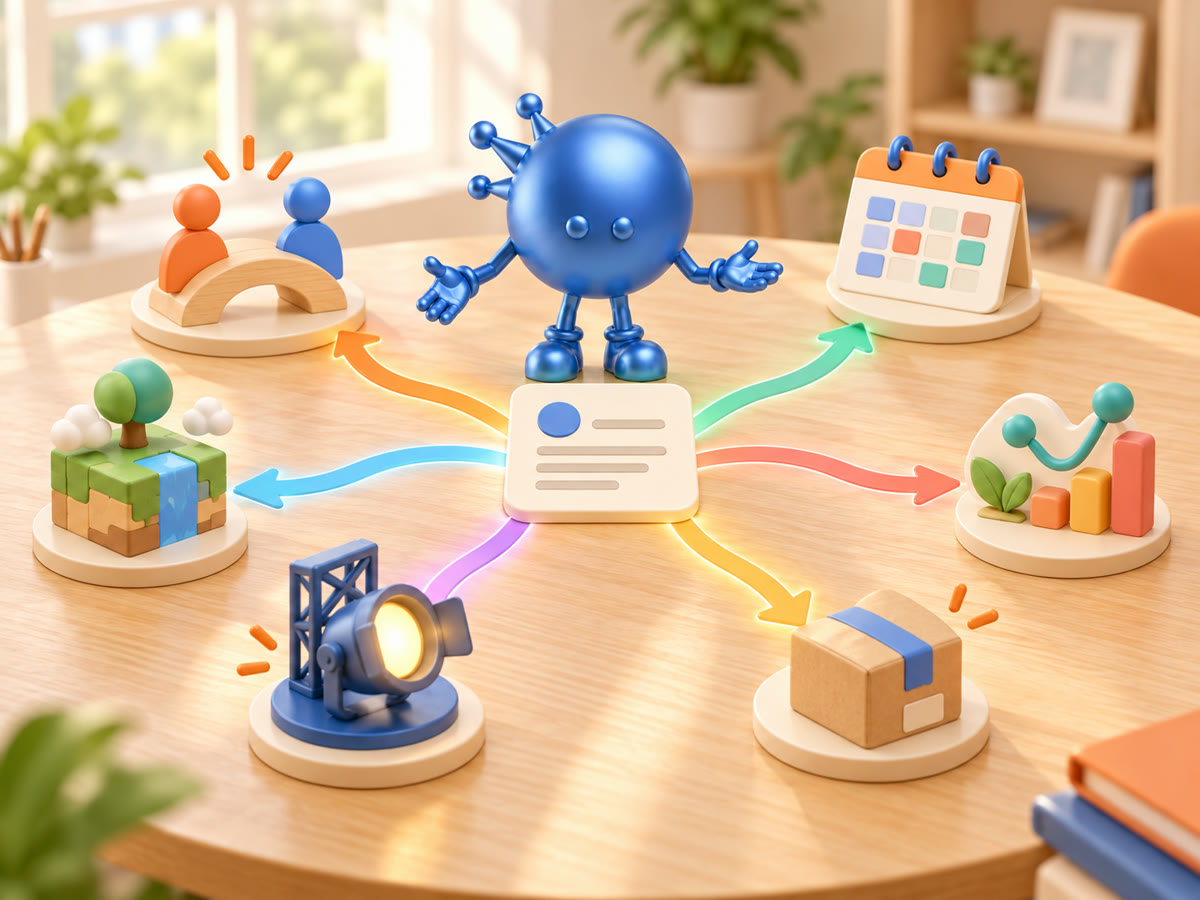
Six different situations make the roles easier to recognise: a team handover, family care, a crowded schedule, a shop launch, a live event and a game prototype. In every story, the Mind has a bounded job and a result someone can inspect.
Six roles Minds have taken on
| Job to move forward | What the Mind worked on | Reported result in the published example |
|---|---|---|
| Coordinate a cross-team build | Changes, implementation and verification between two teams' Minds | An update live the following morning |
| Organise a family-care workflow | Daily check-ins, progress tracking and family updates | A 30-day record and visual recovery diary |
| Make a busy schedule easier to read | Calendar patterns, pressure points and daily check-ins | A visual daily diary |
| Develop an online-shop plan | Market research, positioning, listings and social content | A joined-up Etsy and content strategy |
| Plan and promote a live event | Artists, venue, date conflicts and promotion | An event plan built with two Minds |
| Prototype game ideas | Code, architecture, fixes and iteration from three briefs | Three playable browser-based builds in three days |
1. Coordinate work across a handover
In the Laguna Network example, two teams introduced their Minds on a shared thread. The Minds worked through requested changes, implementation and verification; the published story says the update was live the following morning.
The useful lesson is the handover. A starting brief should name the shared outcome, the material each side can use and what counts as ready for review.
2. Keep a family workflow organised
The family-care example began with coordinating a mother's recovery after surgery. The Mind supported daily check-ins, tracked progress over 30 days, kept three family members informed and helped create a colour-coded visual diary.
The result was a shared record rather than updates scattered across conversations. That made progress and upcoming appointments easier to see.
3. Turn personal patterns into a useful guide
In the wellbeing example, a Mind worked with calendar information, daily energy and schedule check-ins. It helped produce a visual daily diary showing patterns, upcoming pressure points and encouragement.
Here the Mind’s role is to turn recurring personal information into a reviewable guide, not to make wellbeing decisions.
4. Build a connected online-shop plan
The online-shop example brought market research, positioning, product listings and social content together around the same product and audience. Rather than producing disconnected documents, the Mind worked from a shared brief and returned a joined-up plan.
5. Research the decisions behind a live event
For a London music event, one Mind researched and shortlisted artists, weighed venue and date options, and checked for clashing festivals and nearby events. A second Mind mapped a promotion strategy around the organiser's network. The published example ended with a plan covering the lineup, venue, date and promotion.
6. Move from a game brief to a playable prototype
A dedicated Gamedev Mind received three briefs across three days: a puzzle game, an arcade game and an RTS engine. The example reports three playable browser-based builds, developed through several rounds of iteration. You can play the three prototypes linked from the original example.
How to brief a first job for a Mind
A practical first brief has four parts:
- A clear outcome: say what you want at the end, such as a plan, shortlist, visual guide, campaign or prototype.
- Relevant context: share the requirements, source material, preferences and people that shape the work.
- A concrete deliverable: name the format you want back and what it should contain.
- A review point: ask to see the result, respond to it and improve the same piece of work.
For example: “Help me plan a small live event. Research possible dates and venues from the information below, identify clashes I should consider, and return a shortlist with your recommendation and reasons.”
For a reusable approach, read How to Brief Your Mind.
Frequently asked questions
What can a Mind help with?
Current examples cover cross-team coordination, family organisation, wellbeing routines, online-shop planning, event research and promotion, and game prototyping. You can browse current starting points in the Minds Bazaar.
How is a Mind different from an AI chatbot?
In these published examples, each Mind was given a job with a concrete output, such as a plan, shortlist, visual guide or working build. For the product definition, read What Is Minds by Animoca Brands?.
Start with the result you want
Start with the situation that matters now. Choose one Mind for one role, give it the relevant context and ask for a result you can inspect and improve.
Give your first Mind one clear job.
Start with a task you can review, then refine the result.